Quick facts: Rishikesh
- Rishikesh is a holy town in Uttarakhand where the Ganga leaves the Himalayan foothills for the plains, and the starting point of the Char Dham routes.
- Haridwar is about 25 km downstream, close enough for a day trip or a combined visit.
- The Beatles came in February 1968 to Maharishi Mahesh Yogi's ashram, now known as the Beatles Ashram (Chaurasi Kutia).
- Sivananda Ashram, headquarters of the Divine Life Society, was founded here in 1933.
- Nearly all restaurants in the town core are vegetarian and alcohol-free.
- Haridwar's next Kumbh Mela is in 2027, with reported dates of 14 January to 20 April 2027.
Checked: Oct 2026
A sacred town on the Ganga
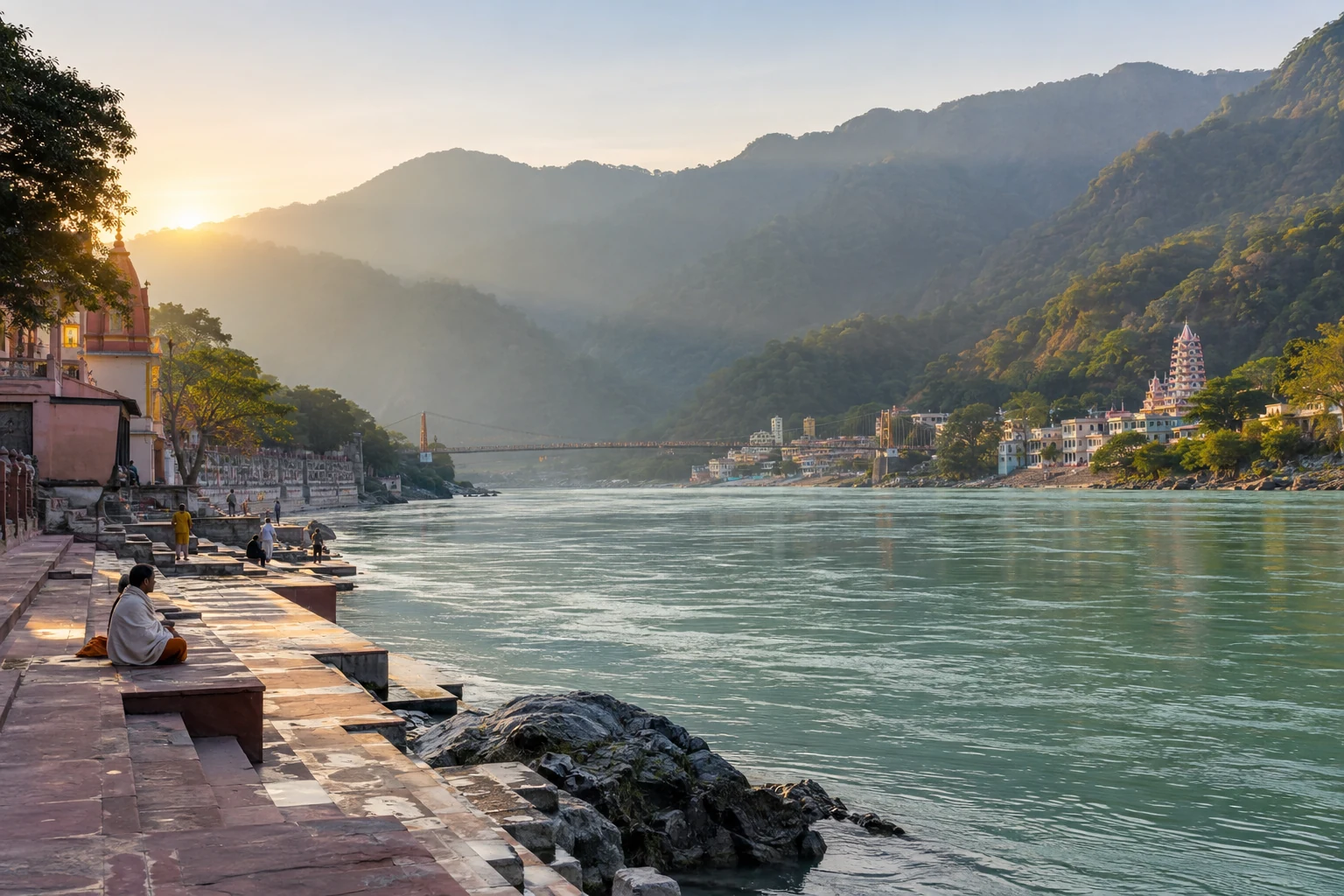
Rishikesh is a pilgrimage town because of where it sits: where the Ganga leaves the Himalayan foothills and meets the plains, a geography that has made it a natural pilgrimage point for centuries. Devotional tradition connects the name itself to Lord Vishnu — "Hrishikesh" — said to have appeared here to a sage after long austerities, and older accounts also refer to the area as "Kubjamrak." The Mahabharata and Ramayana both mention the region, and the Raghunath Temple, with its Rishikund tank, is tied to legends of Rama himself. Adi Shankaracharya's visit in the 9th century CE is often credited with lifting Rishikesh's standing as a pilgrimage centre, cementing its role as a starting point for the Char Dham routes into the mountains. For a visitor's overview, see Uttarakhand Tourism's Rishikesh page.
From pilgrim town to the world's yoga capital
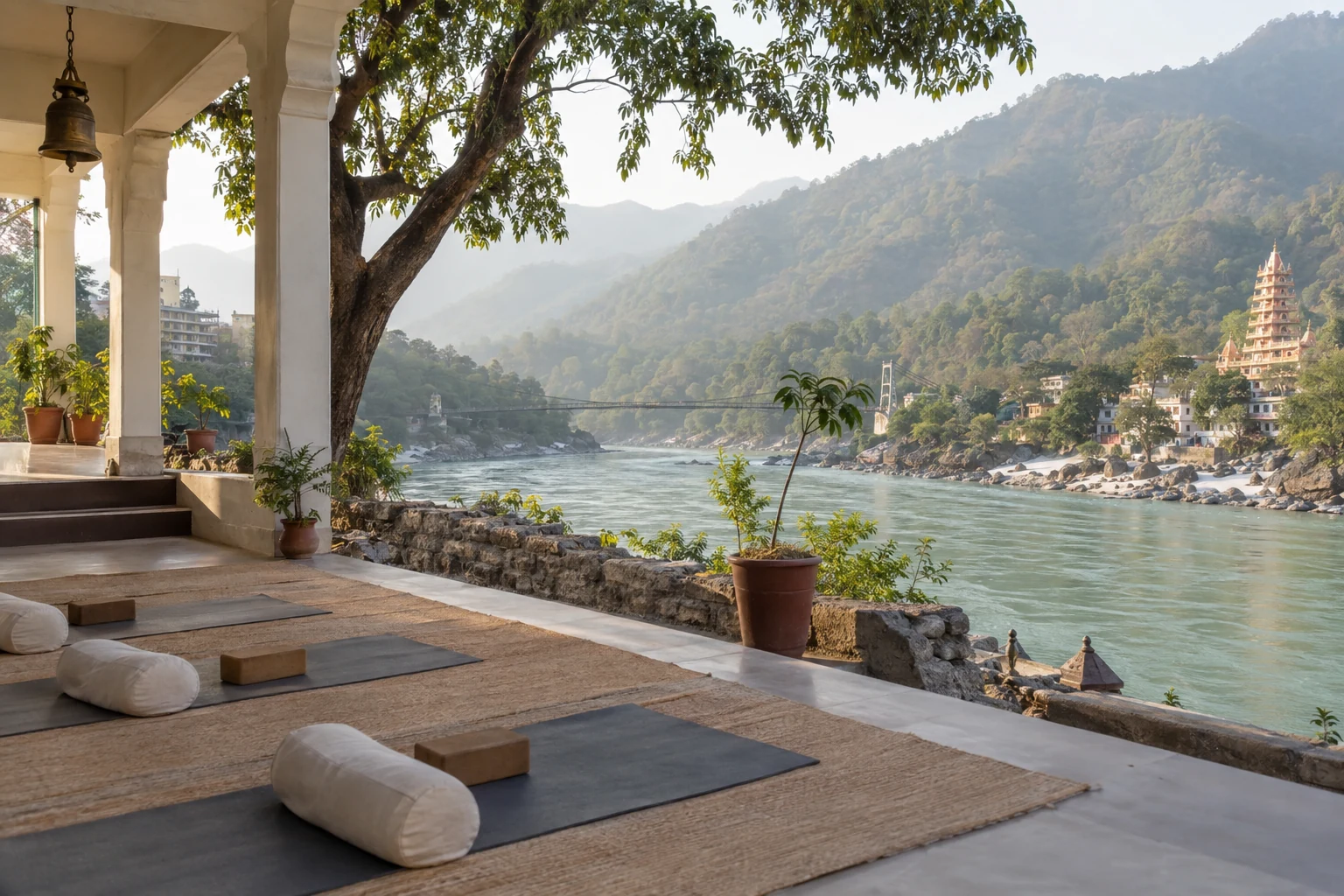
The Beatles made Rishikesh a world yoga name in 1968. It was a domestic Hindu pilgrimage destination long before it had any international profile; that changed in February 1968, when The Beatles travelled here for an extended meditation course at Maharishi Mahesh Yogi's ashram — the site now widely known as the Beatles Ashram, inside what is formally the Chaurasi Kutia complex. The band wrote dozens of songs during their stay, several of which appeared on the White Album, and the global attention that followed is commonly credited as the turning point that put Rishikesh on the international yoga and meditation map. The town has built on that ever since, with a large concentration of yoga ashrams, teacher-training schools, and an annual International Yoga Festival.
Rivers, rapids, and a newer adventure identity
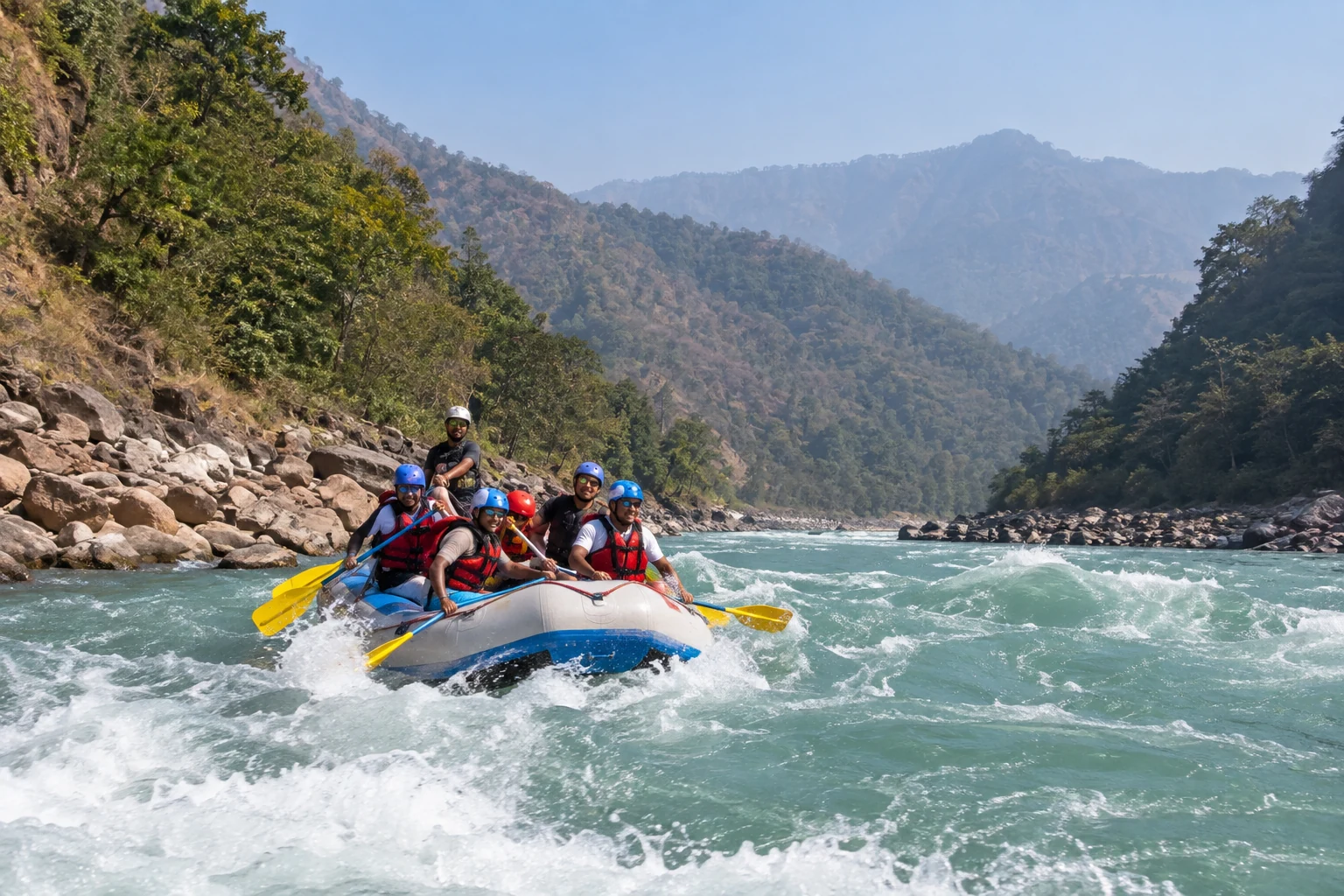
Rishikesh is also North India's main adventure-sports base: alongside its spiritual reputation, it gradually became the home of white-water rafting on the Ganga, camping, trekking, bungee jumping, and more. This grew over decades rather than around a single moment, and today it shapes the daily rhythm of areas like Tapovan as much as the temples and ashrams do. The result is a town where sadhus, long-term yoga practitioners, pilgrim families, and backpackers all share the same ghats — sometimes within the same afternoon.
Rishikesh and Haridwar: two towns, one river
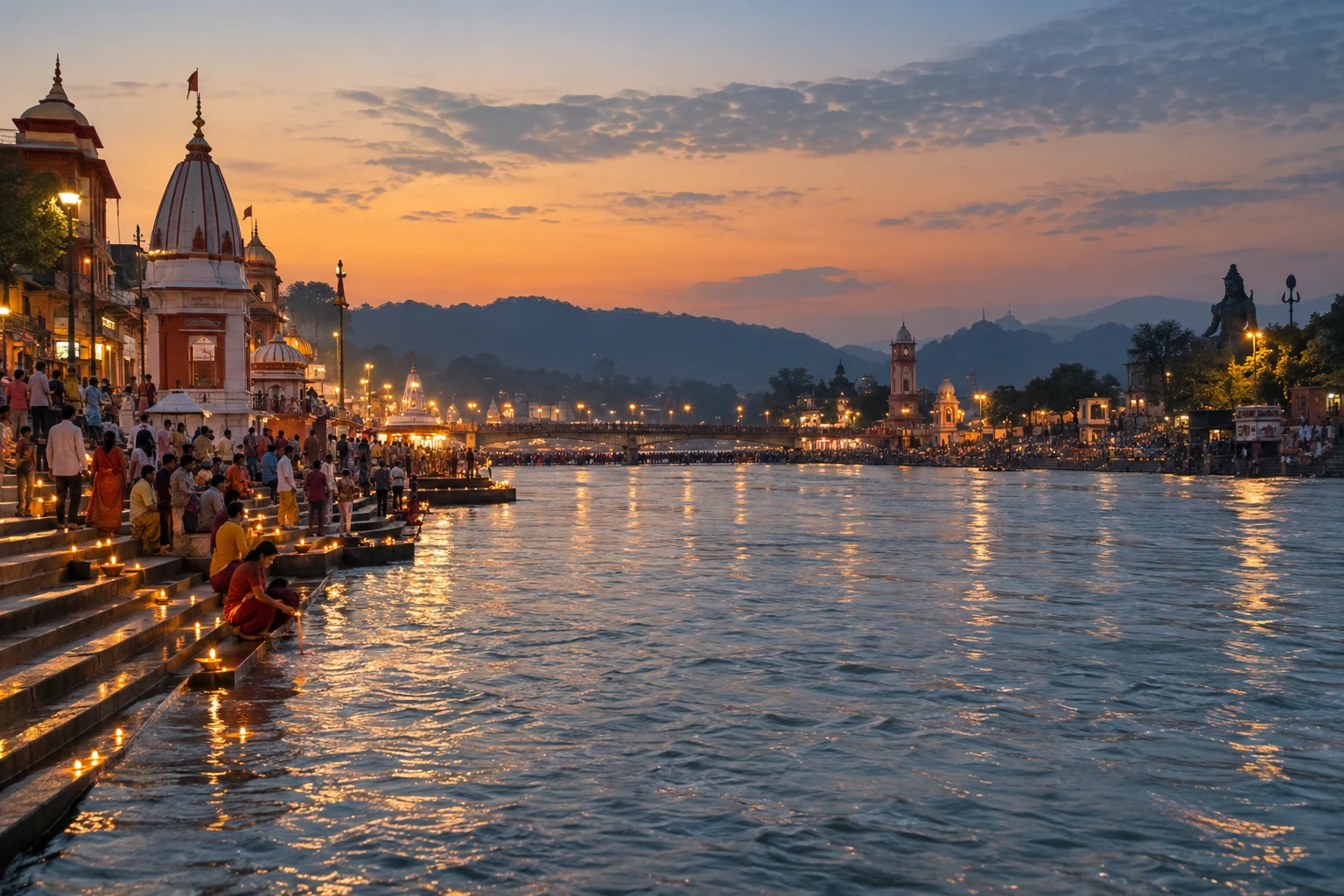
Haridwar is the older, more ritual twin, about 25 km downstream. It is one of Hinduism's seven most sacred cities and a very different experience from Rishikesh. Where Rishikesh blends yoga, wellness, and adventure with its spirituality, Haridwar is older and more ritual-dense — its evening Ganga Aarti at Har Ki Pauri, run by hereditary priest families at the Brahma Kund, is louder, larger, and more traditional than Rishikesh's own aarti at Parmarth Niketan. The short distance between the two makes a combined visit a common itinerary: ritual immersion in Haridwar, calmer riverside days in Rishikesh. Driving up from Delhi? Our Delhi to Rishikesh road-trip guide compares the new expressway with the old Haridwar highway and covers where to park once you arrive.
Haridwar's Kumbh Mela and the road ahead to 2027
Haridwar's next major Kumbh Mela gathering is in 2027, following the traditional roughly-twelve-year cycle; published schedules put it between 14 January and 20 April 2027, not yet officially confirmed. Checked: Oct 2026 Rishikesh, a short drive away, is a natural, calmer base for travellers who want to experience it without competing for lodging in Haridwar itself. See our dedicated Kumbh 2027 guide for what's confirmed so far and what isn't yet.
Where to stay?
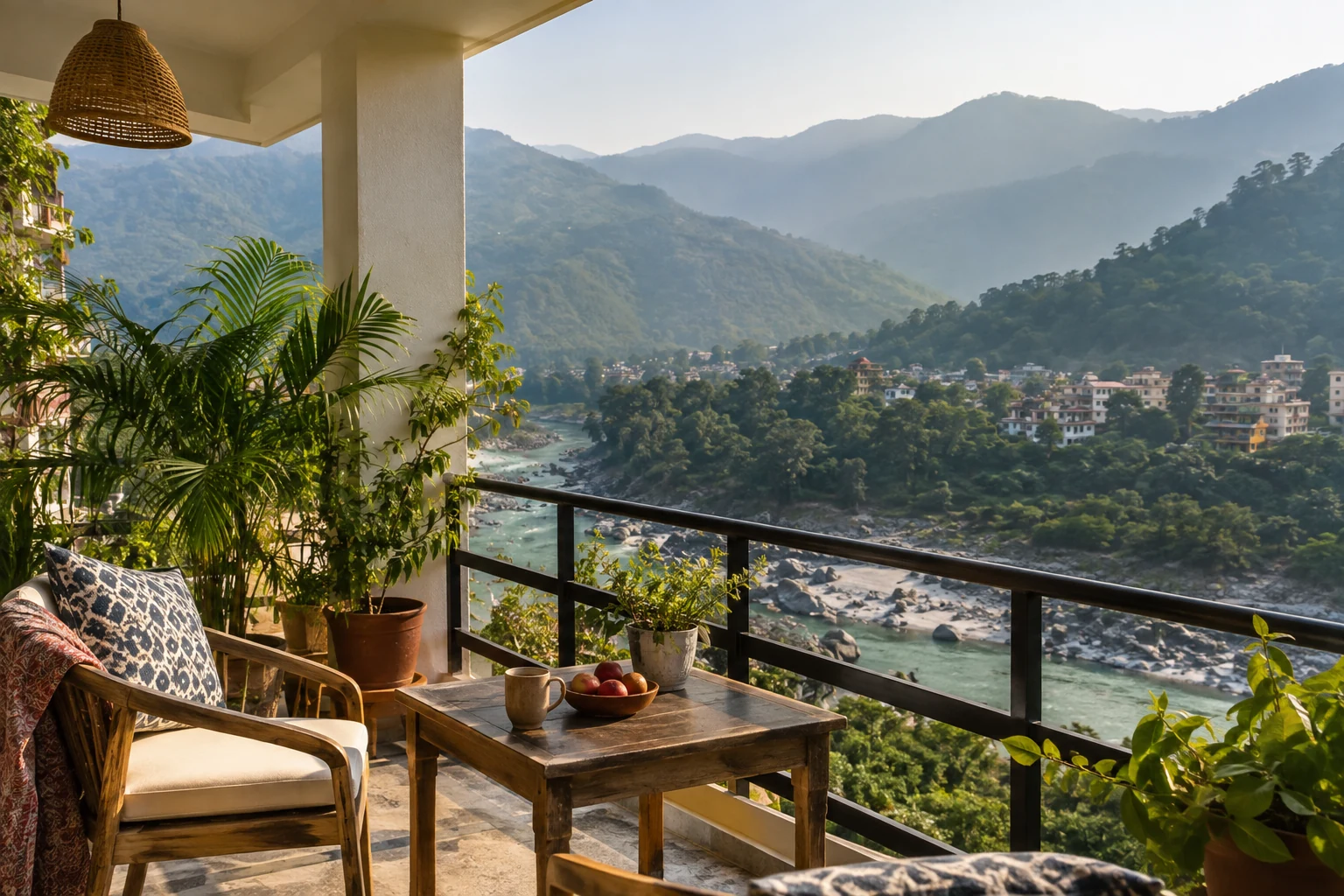
Tapovan for cafes and yoga, Swarg Ashram for slow ashram days, Triveni Ghat for families and the aarti: choose your base by the kind of days you want to have. Our homestay listings help you stay in a quieter area while keeping the riverfront, yoga, temples, and adventure routes within reach.
Tapovan
Best for cafes, yoga studios, rafting access, and travellers who want an active base.
See Tapovan staysSwarg Ashram
Good for slower days, ashram walks, spiritual stays, and being closer to classic Rishikesh atmosphere.
See Swarg Ashram staysTriveni Ghat
Useful for families, markets, aarti evenings, railway-road access, and practical city movement.
See Triveni Ghat staysTraveller tips
Plan around the town's rules and its lanes, not against them.
- Rishikesh is a holy town: nearly all restaurants are vegetarian and alcohol-free, and this is worth planning around rather than working against.
- Ask your homestay about stairs, parking, luggage help, and vehicle access before arrival.
- Traffic can slow down near bridges and popular ghats during evenings, weekends, and holidays.
- For quiet sleep, ask whether the stay is near a main road, cafe strip, temple loudspeaker, or event area.